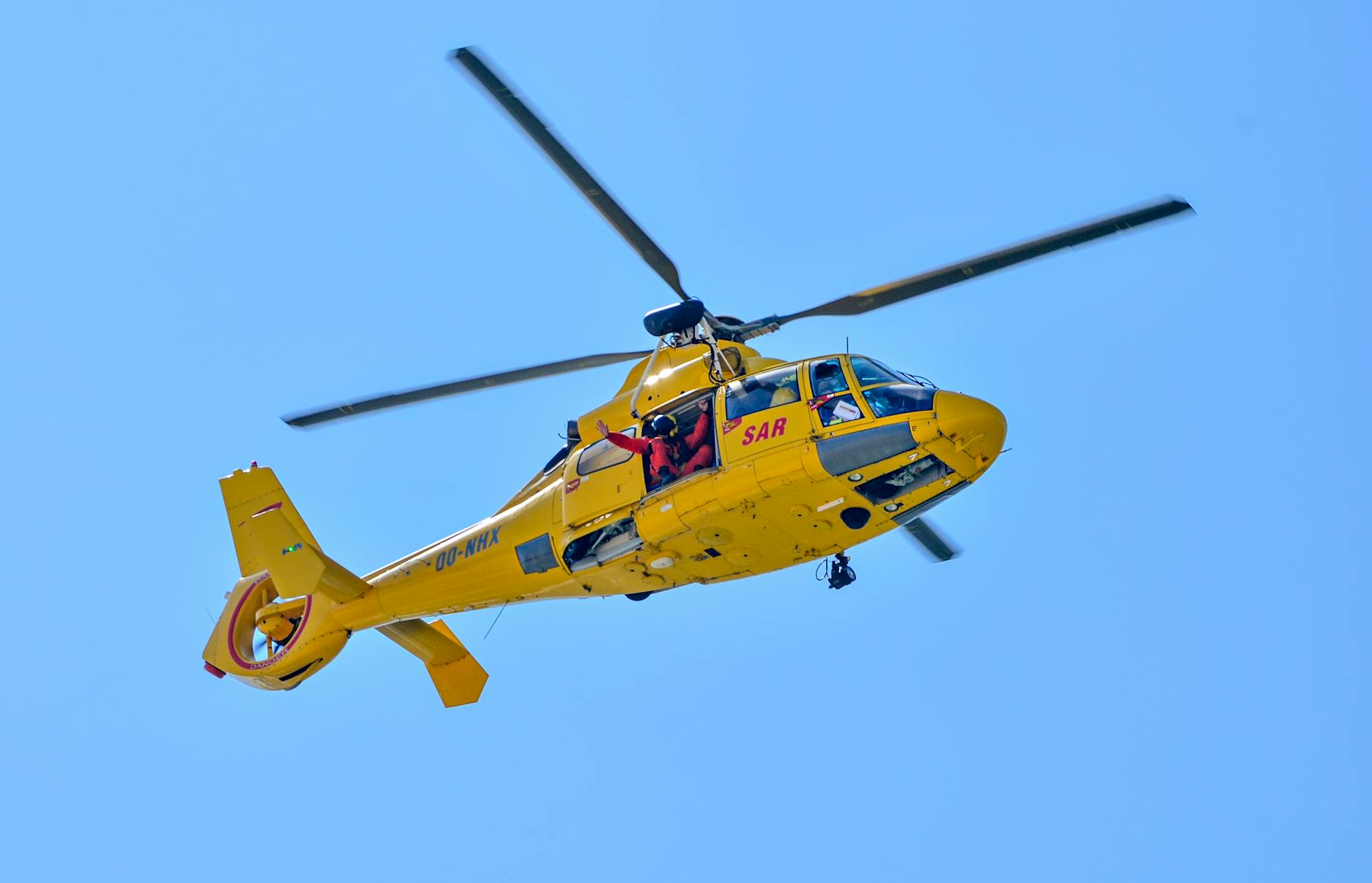
SAN CLEMENTE, Calif. — On a scrubby ridge above Avenida La Pata, just inland from the beaches and master‑planned subdivisions of San Clemente, a new concrete circle has quietly become one of south Orange County’s most important pieces of firefighting infrastructure. It is not a new fire station or water tank, but a helicopter landing pad — a forward base that officials say will help keep fast‑moving wildfires from racing out of canyons and into neighborhoods.
A new launch point above town
The Orange County Fire Authority has established the helipad next to its San Clemente fire station along Avenida La Pata, near Avenida Vista Hermosa, on land provided by the city. The pad, a marked landing and takeoff zone carved into the hillside, allows the agency to stage one of its Firehawk helicopters in San Clemente during periods of extreme fire danger, rather than at its usual base far to the north at Fullerton Municipal Airport.
Officials describe the site as a “forward‑operating helipad” designed to strengthen their rapid initial attack on wildfires in the region. “The helipad will allow for quicker deployment to emergencies in southern Orange County,” Captain Sean Doran of OCFA said in comments reported when the facility was announced in 2025, noting that helicopters normally must fly the length of the county before reaching the south‑county hills.
Built for Santa Ana winds and sudden flames
The pad opened in late 2025, timed for the height of Southern California’s fall fire season. OCFA says the site will not host a helicopter full‑time; instead, aircraft will be pre‑positioned there during “severe weather events” — Santa Ana wind episodes, dangerous fire conditions and even major winter storms where swift access to remote terrain may be needed.
When staffed, the helipad effectively turns San Clemente into a launch point: crews can sleep and stage at the adjacent fire station, while the helicopter sits fueled and ready on the pad, minutes from the wildland‑urban interface ringing Talega and the inland ridgelines. For residents living along canyon edges, the promise is not a constant roar of rotor blades, but the prospect that, when a column of smoke appears, water‑dropping aircraft may arrive in minutes rather than tens of minutes.
What a helipad is — and what it is not
In aviation terms, the San Clemente facility is deliberately modest. A helipad is the basic landing and takeoff surface for helicopters, usually a marked, load‑bearing pad with safety clearances and lighting, but without the full array of support buildings, fueling systems and passenger areas that define a heliport.
That simplicity is part of the design. By focusing on a secure pad and using existing station facilities for crews, OCFA and the city were able to put the site into service quickly, creating a flexible forward base that can be activated or stood down as conditions change.
A south‑county network in the sky
The San Clemente pad is one node in a growing web of helicopter infrastructure aimed at keeping small fires small. Alongside fixed pads, the county has invested in specialized water‑supply stations with names that sound like something out of science fiction: HeloPods and heli‑hydrants.
In San Juan Capistrano, a HeloPod near Ortega Highway serves as a permanent dip source where helicopters can lower their hoses into a tank fed by city water, refill in seconds and return to the fire line without making long trips to lakes or reservoirs. A second HeloPod, installed in Aliso Viejo off Wood Canyon Drive, gives pilots another refill point tucked into a corridor of open space and canyons that has burned repeatedly over the past two decades.
Laguna Beach, perched on steep coastal bluffs to the west, hosts its own “heli‑hydrant,” a large, automatically refilling tank designed as an urban dip source above town. Taken together with the new San Clemente helipad, these facilities create a lattice of launch and refill points so that helicopters can cycle repeatedly between fire and water with minimal transit time.
A local investment in regional protection
City leaders in San Clemente agreed to provide the land for the helipad, and OCFA crews handled the construction and modifications needed for helicopter operations. For the city, which contracts with OCFA for fire protection, the project is both a local safety measure and a regional contribution: the pad can support responses not only in San Clemente but in neighboring communities when flames jump ridgelines or cross jurisdictional boundaries.
Fire officials have set an ambitious goal of keeping all wildfires within their area of responsibility to 10 acres or less whenever possible, a target that depends heavily on speed of attack from both ground and air. In that context, a single concrete circle on a windy ridge — idle on calm days, busy when the weather turns — is more than new pavement; it is a bet that shaving a few minutes off the first water drop can make the difference between a contained brush fire and a regional disaster.