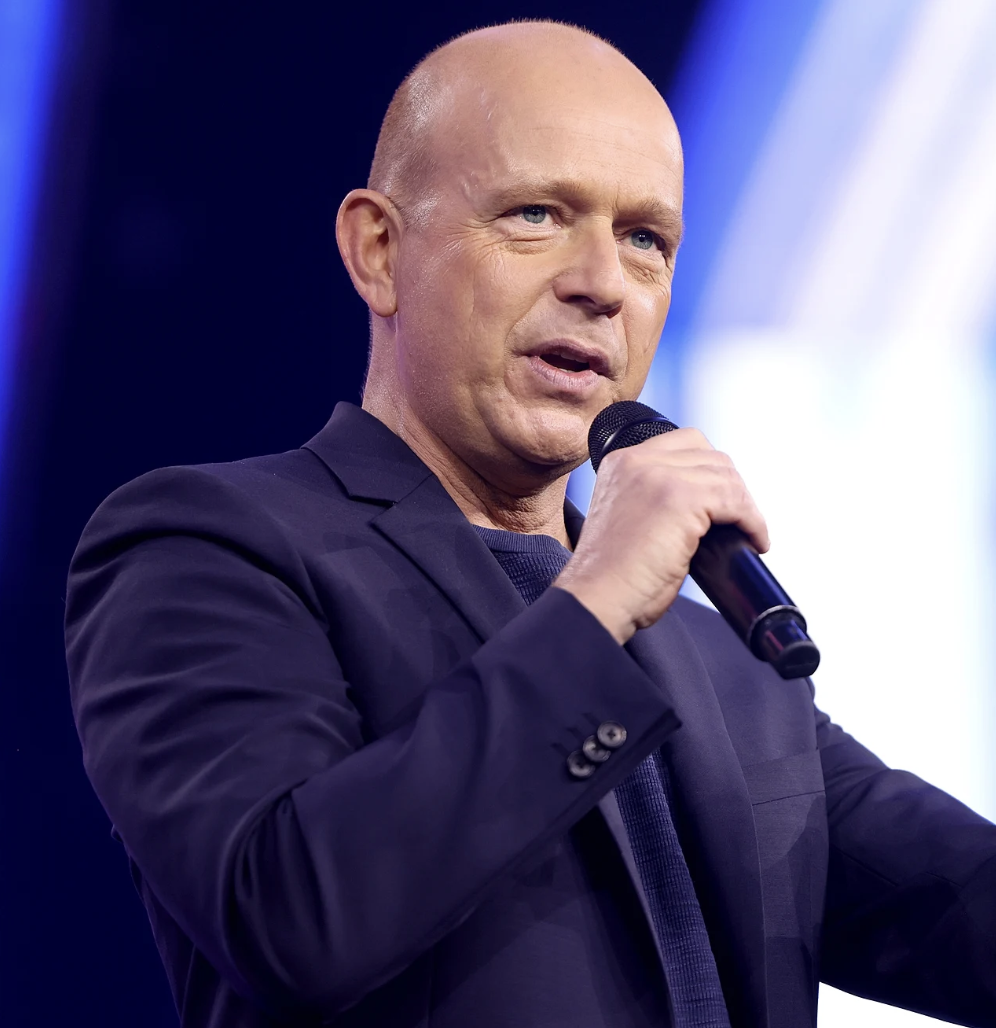
Republican Steve Hilton is poised to be the top winner in yesterday’s primary election for California governor, with the likelihood that Mr. Hilton will face Democrat Xavier Becerra in the general election in November.
According to the Associated Press election tracker, as of 6:45 am today with 58% of votes counted, Mr. Hilton is the leading candidate with 27.8% of the vote. Following Hilton is former HHS secretary Xavier Becerra, a Democrat, with 25.45%, followed by Democrat billionaire Tom Steyer, with 19.6%.
Under California’s election rules, the top two finishers, regardless of party, will advance to the November general election. However, election officials cautioned that the state’s drawn‑out vote‑counting process means the final lineup might not be clear for days.
The early numbers capped a volatile campaign that scrambled familiar partisan lines in the nation’s largest Democrat state, elevating a former Biden cabinet member, a Trump‑aligned television commentator and a liberal mega‑donor turned candidate as the three dominant contenders. Polls in the closing weeks had consistently placed Mr. Becerra in first place with roughly a quarter of likely voters, while Mr. Hilton and Mr. Steyer jostled for second in the high teens or low 20s, a dynamic that appeared to carry into Election Day. Chad Bianco, the Republican sheriff of Riverside County, and other once‑prominent hopefuls were stuck in the low double digits or single digits by Tuesday night.
A Conservative Commentator’s Test in Deep‑Blue California
Mr. Hilton, 56, entered the race as a political outsider in California but a familiar figure to conservative viewers nationwide, having served as a strategist to former Prime Minister David Cameron in Britain before moving to the United States and hosting a weekly Fox News program for several years. A British‑born immigrant who later became a U.S. citizen, he has built his campaign on a promise to deliver what he calls a “Republican reset” to a state long dominated by Democrats, with the explicit backing of Mr. Trump and a network of conservative donors.
Casting Sacramento as a “one‑party cartel” in his book, Califailure: Reversing the Ruin of America’s Worst-Run State, Mr. Hilton has placed affordability at the center of his message, vowing to cut income and gas taxes, pare back environmental and zoning rules to spur housing construction, and expand in‑state oil and gas production to lower energy costs. He has framed his campaign as a revolt by working‑ and middle‑class Californians who, he argues, have been priced out of homeownership and squeezed by rising utility bills while Democratic leaders focused on climate regulations and social programs. If he secures a spot on the November ballot, it would set up a rare test of whether a Trump‑aligned Republican can compete statewide in California’s polarized but economically strained electorate.
A Former Health Secretary’s Comeback Bid
For Mr. Becerra, 68, a Los Angeles‑born son of Mexican immigrants who served more than two decades in Congress before becoming California’s attorney general and then U.S. secretary of health and human services under President Biden, the race has been a bid to transform a long résumé in public service into executive power in Sacramento. As attorney general, he became a leading antagonist of the Trump administration, filing scores of lawsuits over immigration, health care and the environment; in Washington, he helped oversee the federal response to the coronavirus pandemic, including vaccine distribution, although the Biden White House blamed Becerra for mishandling the government’s messaging.
On the campaign trail, Mr. Becerra has pitched himself as a steady hand at a moment of economic anxiety, promising to “protect the California Dream” by cracking down on what he calls price gouging by utilities, insurers and oil companies. He has pledged to declare a state of emergency to freeze or slow increases in energy and insurance rates, to preserve access to reproductive health care and to resist efforts by President Donald Trump and a Republican Congress to roll back state climate and labor standards. His supporters say his blend of legal experience and progressive credentials makes him best positioned to manage a sprawling state government while fending off federal encroachment.
A Billionaire Activist Pushes an Anti‑Corporate Message
Mr. Steyer, 68, a former hedge fund manager who amassed a fortune in part through fossil fuel investments before divesting and reinventing himself as a climate‑focused philanthropist, has used his wealth to shape Democratic politics for more than a decade. He has poured more than $200 million of his own money into the governor’s race, campaign finance filings show, making the contest the most expensive primary in California history and funding a barrage of advertising that has kept him competitive despite limited institutional support.
In his campaign, Mr. Steyer has argued that California’s cost‑of‑living crisis is inseparable from what he portrays as corporate excess and regulatory capture, singling out investor‑owned utilities and large landlords. He has proposed an aggressive slate of policies that includes tightening oversight of power companies, raising property taxes on commercial real estate and imposing an “A.I. usage fee” on large technology firms to fund job training and income support for workers displaced by automation. His critics have questioned whether a billionaire investor is the right messenger for an anti‑corporate crusade, but his allies say his willingness to self‑fund shows independence from the same interests he targets.
Affordability Becomes the Defining Issue

Though the three men span the ideological spectrum, their campaigns have converged on a shared recognition that Californians are unsettled by the rising price of nearly everything (housing, electricity, insurance and groceries) and increasingly skeptical that the state remains a place where ordinary people can thrive.
Mr. Becerra has emphasized consumer protection and state intervention to rein in prices; Mr. Hilton has blamed taxes and environmental rules for driving up costs; and Mr. Steyer has focused on corporate consolidation and utilities’ political clout.
The outcome of the primary will determine which of those narratives voters will see on full display in the fall campaign, when turnout is expected to surge and national attention will return to California, not only as a Democratic stronghold but as a laboratory for competing answers to the economic unease reshaping politics across the country. For now, with hundreds of thousands of ballots still to be processed, election officials urged patience, and all three leading campaigns signaled they were prepared for a long count.