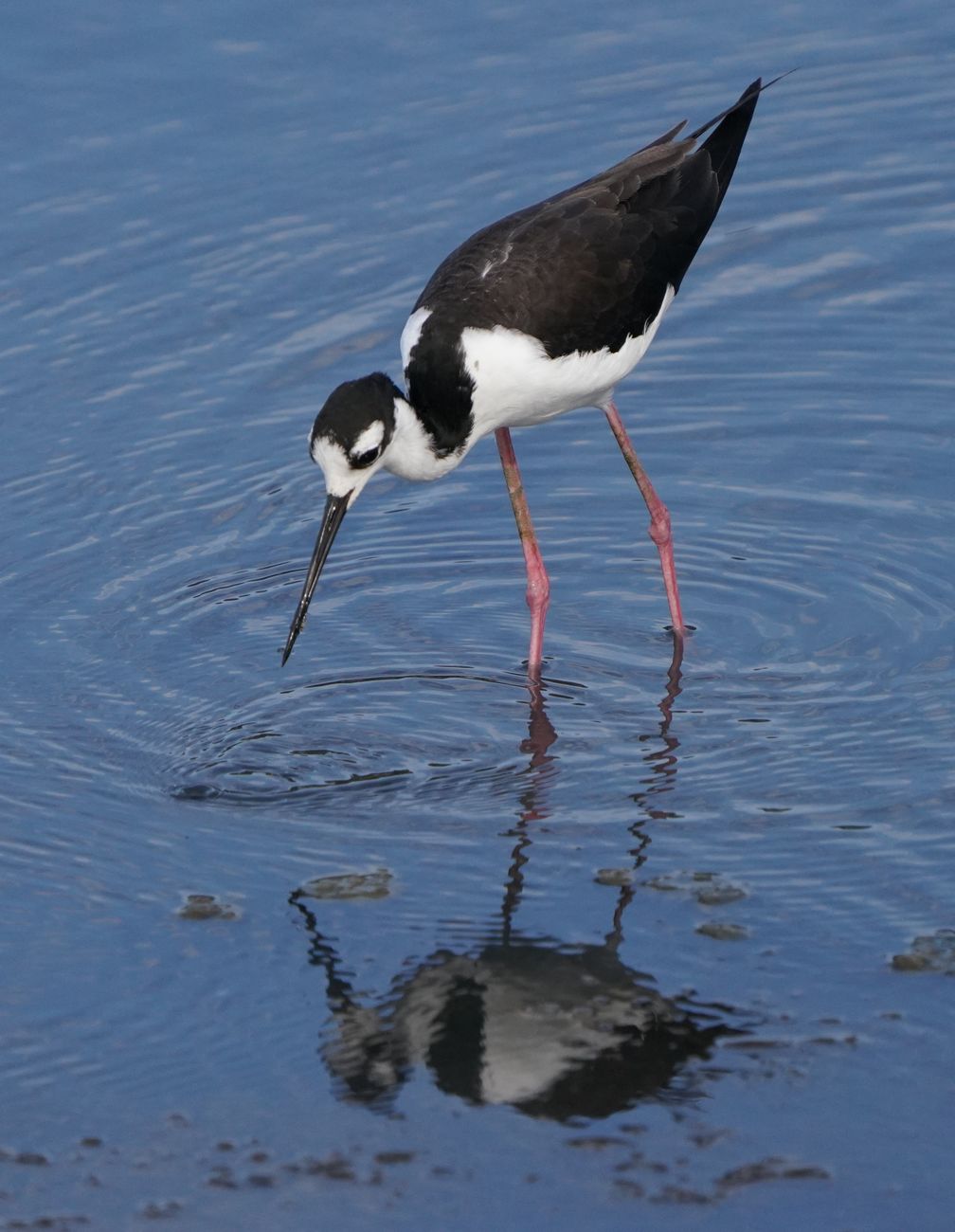
State regulators are accusing the Orange County Water District of illegally bulldozing a black-necked stilt nest in the Santa Ana River near Angel Stadium, after Creek Team activists flagged the work on social media, according to reporting by the Voice of OC.
In a letter, the California Department of Fish and Wildlife (CDFW) issued a formal Notice of Violation on July 7, 2026, to the Orange County Water District, alleging that a district contractor destroyed an active black-necked stilt nest while operating a bulldozer in the Santa Ana River in late May under an existing streambed alteration agreement, in violation of Fish and Game Code sections 1602 and 3503 after failing to provide the required five-day advance notice and to maintain protective buffers around known nesting sites.
California Fish and Game Code Sections 1602 and 3503 are two of the state’s most vital environmental regulations, protecting waterways and nesting birds from human development.
Both carry real teeth.
Section 1602 requires anyone altering a river, stream, or lake bed to notify CDFW first — divert water, dump debris, or touch the banks, and you need a formal Streambed Alteration Agreement. It prohibits any person, agency, or utility from substantially diverting or obstructing the natural flow of a river, stream, or lake, or from substantially changing or removing material from its bed, channel, or bank, without first notifying the Department of Fish and Wildlife and, when required, obtaining and fully complying with a lake or streambed alteration agreement that includes measures to protect fish and wildlife resources. Violations of this section can trigger civil or criminal prosecution.
A Streambed Alteration Agreement is a legally binding contract between a project applicant and the CDFW that outlines mandatory measures to protect fish and wildlife resources. It is required under Section 1602 of the California Fish and Game Code before anyone can legally alter a river, stream, or lake.
Section 3503 bans taking or destroying the nest or eggs of any native bird, common or rare. It’s why tree crews and contractors halt work the moment a nest turns up, until a biologist confirms the chicks have fledged. The law makes it unlawful to take, possess, or needlessly destroy the nest or eggs of any bird, except as otherwise authorized by the Fish and Game Code or regulations adopted under it; a violation of this provision is a criminal offense.
The black-necked stilt has the second-longest legs relative to body size of any bird — only the flamingo beats it. Black above, white below, needle bill, bubblegum-pink legs, and it wades California’s mudflats and saltmarshes snapping up shrimp, tadpoles, and insect larvae.
The bird is a fighter. It’ll scream nonstop at predators, and nesting groups run a “popcorn display” — bouncing and flapping in unison to distract threats away from eggs. In hot weather, parents soak their bellies and make up to 100 trips a day back to the nest, using wet feathers to cool the eggs down.
They thrive in shallow, open wetlands with minimal vegetation, including saltmarshes, mudflats, estuaries, and flooded agricultural fields. They range along the Atlantic, Pacific, and Gulf coasts, stretching into parts of inland North America and down to South America.