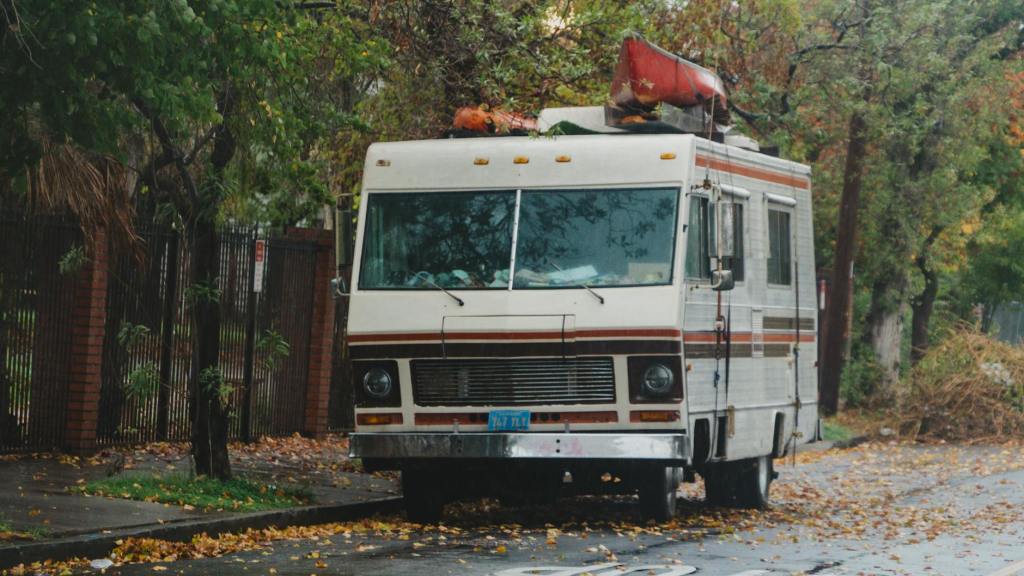
Measure aimed at clearing abandoned vehicles blocked in Los Angeles after opponents decry it as criminalizing homelessness
LOS ANGELES — A California law that dramatically expands the ability of local authorities to seize and destroy recreational vehicles has become mired in legal challenges and fierce debate over how to address homelessness in a state where nearly 40 percent of unhoused residents live in their cars or RVs.
Assembly Bill 630, signed by Gov. Gavin Newsom last October, raised the threshold for disposing of abandoned recreational vehicles from $500 to $4,000 in Los Angeles and Alameda Counties — an eightfold increase that advocates say will allow cities to destroy thousands of people’s homes under the guise of public safety.
The law, which took effect Jan. 1, has already hit a major roadblock. In February, a Superior Court judge blocked the City of Los Angeles from implementing the measure, ruling the city lacks legal authority to carry out certain provisions. The decision came after a coalition of advocacy groups challenged the city’s attempt to use the law, arguing it only authorized Los Angeles County, not the city itself, to launch the program.
“This bill will strip vehicularly housed people of their most valuable asset, at great cost to law enforcement, local governments, and the courts,” said opponents in a letter urging Mr. Newsom to veto the measure.
Introduced in February 2025 by Assemblyman Mark González, a Democrat from San Diego, in partnership with Los Angeles Mayor Karen Bass, the legislation was designed to address what supporters described as a public health and safety crisis posed by inoperable RVs.
“We have stories from people who have inoperable RVs that are parked in their neighborhoods, under freeways, that they know are ground-zero for drugs, for prostitution rings, for other criminal activities,” Mr. González said last year.
Under the law, local agencies can dismantle and dispose of impounded RVs valued at up to $4,000 rather than auctioning them, a process supporters say prevents unsafe vehicles from returning to the streets. The measure operates as a five-year pilot program expiring in January 2030 and requires annual reporting on the number of RVs removed and people found in vehicles prior to removal.
But the bill drew opposition from more than 40 organizations, including the American Civil Liberties Union of Southern California, Western Center on Law and Poverty, Housing California and Legal Aid Foundation of Los Angeles.
Critics note that in Los Angeles County, 39 percent of unhoused residents live in vehicles, which often serve as “the last barrier between stability and sleeping outside”. They characterize the law as criminalizing homelessness by destroying people’s homes.
The measure was amended in September, just before final passage, to limit its scope to only Alameda and Los Angeles Counties after lawmakers expressed concern about broader application. It was signed into law Oct. 13 as Chapter 699 of the 2025 statutes.
The Los Angeles City Council approved a resolution supporting the bill in July 2025, arguing the previous $500 threshold created a system where inoperable RVs posing significant health and safety risks were auctioned and returned to streets. City officials said the higher threshold would allow jurisdictions to “dismantle more of these dangerous, inoperable RVs and get them off the street for good”.
The law requires public agencies to provide authorization that an RV is inoperable before disposal, and makes agencies responsible for towing and storage costs if a vehicle is later determined to have been operable or not a hazard to public health, safety and welfare.
With the court ruling blocking Los Angeles from using the law, the measure’s future remains uncertain as legal challenges continue and advocates push back against what they describe as a “hasty, unaccountable approach to the property of unhoused Angelenos”.

 South County Ridge
Leave a comment